Classic Aioli for Sandwiches
Highlighted under: Effortless Cooking Creations
I remember the first time I tried homemade aioli, and it instantly transformed my sandwiches. The creamy texture, combined with that garlicky punch, elevated even the simplest fillings. Making aioli at home is easier than you might think! With just a few ingredients, you can whip up this classic condiment that not only enhances sandwiches but can also be a fantastic dip for veggies or fries. In this recipe, we’ll guide you to create a velvety, flavorful aioli that will leave your tastebuds dancing.
When I set out to make aioli for my sandwiches, I knew I had to stick to the traditional recipe. The key is using fresh ingredients; the garlic must be chopped finely to release its oils, giving a robust flavor. I like to add a bit of lemon juice to brighten the flavor, which complements the richness of the olive oil perfectly.
After practicing several methods, I found that adding the oil slowly while whisking vigorously yields the best texture. It’s amazing how a little patience turns basic ingredients into a silky-smooth aioli that truly enhances any sandwich!
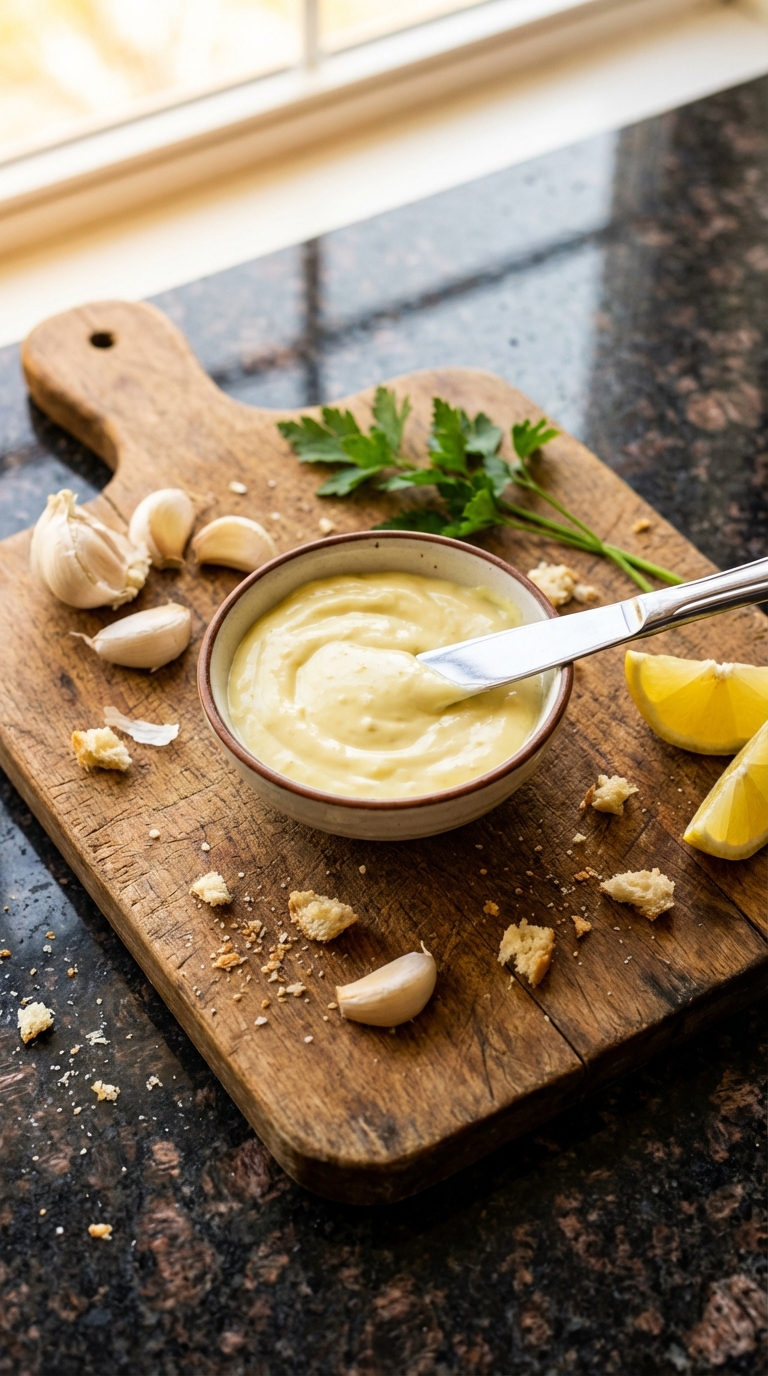
Why You'll Love This Recipe
- Rich and creamy texture that enhances any sandwich
- Simple ingredients come together for a fresh flavor
- Perfect as a dip or spread for any occasion
Mastering the Emulsification Process
Emulsification is key to achieving that luscious, creamy texture characteristic of classic aioli. To do this successfully, it's important to add the olive oil gradually while whisking vigorously. This process allows the oil to integrate smoothly with the egg yolks and mustard, forming a stable emulsion. If you pour the oil too quickly, the mixture may break, resulting in a separate, oily mess. If this happens, you can save it by whisking a new egg yolk in a separate bowl and slowly incorporating the broken mix into it.
During the emulsification phase, watch for the color change in your aioli. It should transition from pale yellow to a lighter, more vibrant shade as air is incorporated, signaling that it’s thickening properly. If your whisking arm gets tired, you can switch to an immersion blender for a quick boost, maintaining the same gradual oil incorporation to keep the emulsion stable.
Ingredient Insights
The quality of your ingredients significantly affects the final taste of your aioli. Using fresh garlic is crucial; it contributes a sharp, aromatic flavor. If you're making a large batch or don't mind a milder taste, you can roast the garlic beforehand to mellow its flavor. This adds a subtle sweetness and an interesting depth to your aioli, enhancing the overall experience.
Olive oil is another vital component. Choose a high-quality extra virgin olive oil for the richest flavor. You can experiment with a blend of oils, such as a neutral oil for a lighter result, but remember that this will modify the traditional taste profile. For a healthier option, consider using avocado oil, which maintains creaminess while offering additional nutrients.
Serving and Storing Tips
Aioli is incredibly versatile and can elevate more than just sandwiches. Try it as a dip for crispy fries or fresh vegetable platters. It's also fantastic on grilled meats or fish, adding a gourmet touch to your backyard barbecues. You can even mix herbs like dill or parsley into the aioli for a fresh twist according to the dish you’re pairing it with.
For storage, keep any leftover aioli in an airtight container in the refrigerator. It will typically last for 3-5 days, but always check for freshness before using. Because it contains raw egg yolks, avoid freezing aioli, as it may separate upon thawing. If you want to prepare ahead of time, you can make it a day in advance; just give it a good stir before serving to restore its creamy texture.
Ingredients
Ingredients
Classic Aioli Ingredients
- 2 large egg yolks
- 1 tablespoon Dijon mustard
- 1 tablespoon lemon juice
- 1 cup extra virgin olive oil
- 3 garlic cloves, minced
- Salt to taste
Mix all ingredients until well combined.
Instructions
Instructions
Prepare the Base
In a bowl, whisk together the egg yolks, Dijon mustard, and lemon juice until well blended.
Incorporate the Oil
While whisking continuously, slowly drizzle in the olive oil until the mixture begins to thicken and emulsify.
Add Flavor
Stir in the minced garlic and season with salt to taste. Adjust the consistency with a little water if necessary.
Serve
Transfer the aioli to a serving dish and enjoy it with your favorite sandwiches or as a dip.
Refrigerate any leftovers in an airtight container for up to a week.
Pro Tips
- For a twist, try adding fresh herbs like basil or parsley for extra flavor. Also, be cautious with the garlic
- adjust to your taste to avoid overpowering the aioli.
Common Troubleshooting
If your aioli isn't thickening as it should, ensure you're adding the olive oil slowly enough. A good tip is to start with a few drops, increasing to a thin stream as the mixture begins to thicken. If it remains runny, don't despair; you can whisk in a teaspoon of water or another egg yolk to help it emulsify.
Another frequent issue is the garlic flavor being too strong or overpowering. If that happens, simply balance it with a teaspoon of honey or a bit more lemon juice to mellow the taste. Also, if the aioli tastes too sour from the lemon, a small pinch of sugar can help to level out the flavors.
Flavor Variations
Feel free to experiment with flavoring your aioli. Adding a teaspoon of smoked paprika gives it a wonderful depth and complements sandwiches with bacon or roasted vegetables. For a spicy kick, consider incorporating minced jalapeños or a dash of hot sauce to pack some heat without overwhelming the garlic base.
You can also create herb-infused aioli by adding freshly chopped basil, chives, or even cilantro. Each herb introduces a unique brightness, allowing you to customize your aioli based on your meal or personal preference. Don't be afraid to adjust the garlic amount to match the herbs for an overall harmonious taste.
Questions About Recipes
→ Can I use a blender instead of whisking by hand?
Yes, a blender or food processor can help achieve a smoother consistency. Just add the ingredients and blend until emulsified.
→ Is aioli safe to eat with raw egg yolks?
If you are concerned about raw eggs, use pasteurized eggs instead to ensure safety.
→ How can I store leftover aioli?
Store aioli in an airtight container in the refrigerator. It should last up to a week.
→ Can I substitute olive oil with another oil?
While olive oil provides the traditional flavor, you can use other oils like avocado or grapeseed oil for a milder taste.
Classic Aioli for Sandwiches
Created by: The Cheflinaskitchen Team
Recipe Type: Effortless Cooking Creations
Skill Level: Beginner
Final Quantity: 8 servings
What You'll Need
Classic Aioli Ingredients
- 2 large egg yolks
- 1 tablespoon Dijon mustard
- 1 tablespoon lemon juice
- 1 cup extra virgin olive oil
- 3 garlic cloves, minced
- Salt to taste
How-To Steps
In a bowl, whisk together the egg yolks, Dijon mustard, and lemon juice until well blended.
While whisking continuously, slowly drizzle in the olive oil until the mixture begins to thicken and emulsify.
Stir in the minced garlic and season with salt to taste. Adjust the consistency with a little water if necessary.
Transfer the aioli to a serving dish and enjoy it with your favorite sandwiches or as a dip.
Extra Tips
- For a twist, try adding fresh herbs like basil or parsley for extra flavor. Also, be cautious with the garlic
- adjust to your taste to avoid overpowering the aioli.
Nutritional Breakdown (Per Serving)
- Calories: 120 kcal
- Total Fat: 13g
- Saturated Fat: 2g
- Cholesterol: 80mg
- Sodium: 50mg
- Total Carbohydrates: 1g
- Dietary Fiber: 0g
- Sugars: 0g
- Protein: 1g